Mallaba: A Sweet Handwritten Font for Web Design
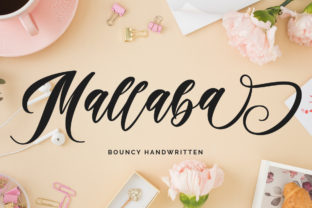
While working on a boutique online store’s homepage, I stumbled upon Mallaba—a sweet handwritten font that immediately caught my eye. Created using a brush pen, it simplifies elegance into one truly outstanding typeface, featuring gorgeous swashes and ligatures that make this script incredibly versatile.
Mallaba for Creative Portfolio Websites and Branding
As a web designer, I often look for fonts that can elevate a creative portfolio without overpowering the design. Mallaba fits perfectly in this scenario. Its soft curves and flowing lines add a personal touch to headings and logos, making it ideal for showcasing artistic work or brand identity. When used in a portfolio site, Mallaba helps convey a sense of authenticity and craftsmanship, which aligns well with the visual storytelling of a creative professional.
The font’s natural flow makes it stand out in hero sections, where it can be paired with a clean sans serif for balance. For instance, using Mallaba for a headline like “Design by [Your Name]” while keeping the body text in a simple, readable font ensures both visual appeal and clarity.
Mallaba for Boutique Online Stores and Product Landing Pages
When designing an online store for a small business, I wanted a font that felt approachable yet refined. Mallaba delivered exactly that. Its handwritten style adds a warm, inviting feel to product banners and call-to-action buttons, helping to create a more human connection with visitors.
However, I learned that Mallaba works best for short phrases rather than long paragraphs. It’s perfect for headlines, taglines, and button text but not ideal for body copy. For example, using it in a banner that says “Shop Our Latest Collection” gives the page a fresh, personalized vibe, while pairing it with a standard sans serif for product descriptions keeps the layout legible and easy to navigate.
Mallaba for Coaching Websites and Digital Course Sales Pages
On a coaching website, I experimented with Mallaba for the main title and subheadings. The font’s elegant swashes added a sense of sophistication, which matched the tone of the content. It was especially effective when used in a section titled “Discover Your Potential,” where the flowing script gave the message a more emotional and motivational feel.
For digital course sales pages, I found that Mallaba worked well as a decorative element in headers and feature lists. It helped draw attention to key points without overwhelming the reader. However, I made sure to keep the rest of the text in a more traditional font to maintain readability and ensure the user experience remained smooth.
Mallaba for Blog Headers and Social Media Graphics
In a recent blog redesign, I used Mallaba for the header of each post. The font’s unique personality made the titles more engaging, encouraging readers to click through. It also complemented the overall aesthetic of the site, adding a touch of creativity without being too flashy.
For social media graphics, Mallaba was a game-changer. It added a handcrafted feel to promotional posts and featured images, making them stand out in a crowded feed. I paired it with bold, modern typography for captions, ensuring the message was clear and the design remained cohesive.
Mallaba for Campaign Landing Pages and Promotional Content
When building a campaign landing page for a new product launch, I chose Mallaba for the headline and supporting text. Its soft, flowing style gave the page a more personal and inviting tone, which resonated well with the target audience. It was particularly effective when used over background images, where the font’s contrast helped it stand out without clashing.
I also tested Mallaba on mobile screens, and it performed well in smaller sizes. The ligatures and swashes were still visible, and the font didn’t lose its charm even at reduced sizes. This made it a reliable choice for responsive layouts, where consistency across devices is crucial.
Mallaba for Logo Design and Brand Identity
One of the most rewarding uses of Mallaba was in logo design. Its brush-stroke style gave the logo a custom, handcrafted feel that felt authentic and unique. I used it for a small business’s logo, and it immediately conveyed a sense of care and attention to detail—key elements in building brand trust.
When integrating Mallaba into a brand kit, I made sure to include alternate characters and ligatures to give the design team more flexibility. This allowed for subtle variations in the logo and other branding materials, ensuring the font remained versatile across different applications.
Mallaba for Web Typography and Font Pairing
As part of a larger web typography strategy, I explored how Mallaba could be paired with other fonts to create a balanced and visually appealing layout. It worked well with modern sans serifs like Roboto or Open Sans, which provided a clean, structured contrast to the script’s fluidity. This combination was especially useful for landing pages and content-heavy websites, where readability is essential.
I also considered how Mallaba would perform in dark mode. Its light weight and open structure made it legible against dark backgrounds, and the swashes added a nice touch without distracting the reader. This made it a great option for websites that support both light and dark themes.